English
 Arabic
 Chinese (Simplified)
 French
 German
 Spanish
 Vietnamese
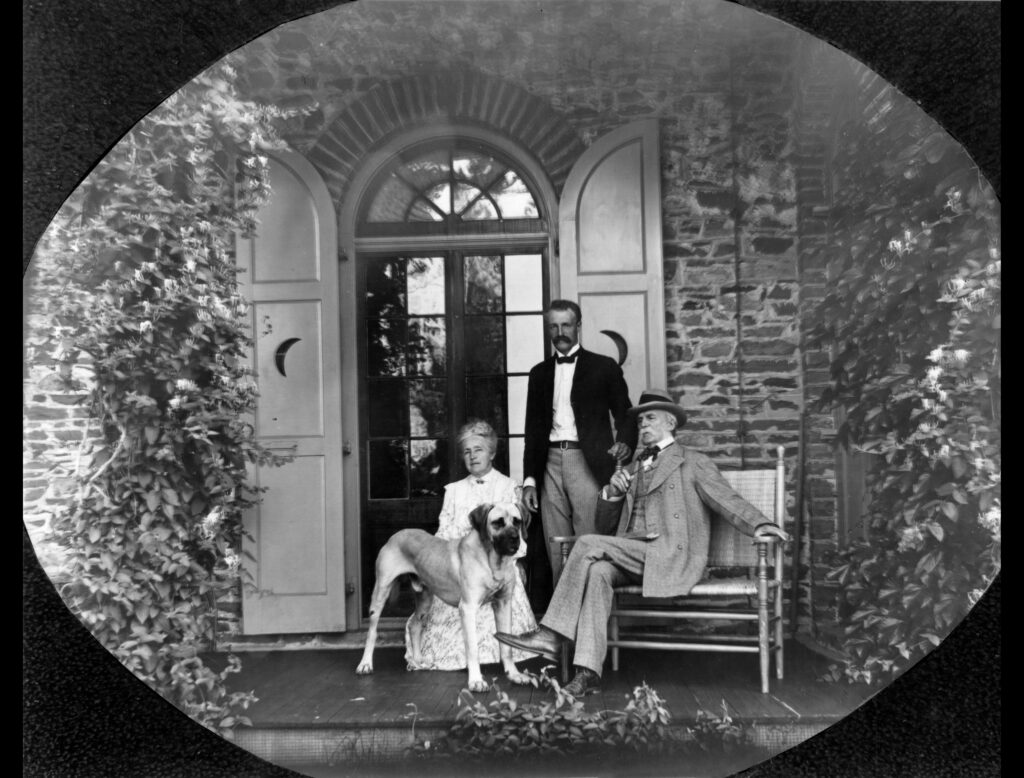
Gifford Pinchot’s professional accomplishments
Gifford Pinchot was a pioneering federal conservationist and governor of Pennsylvania who authored over 30 books on the science of forestry, conservation, and organizational dynamics. Born in Simsbury, CT on August 11, 1865, he served as the first Chief of the U.S. Forest Service from 1898-1910, and his two terms as governor were from 1923-1927 and 1931-1935. He was well-liked for what he accomplished in the gubernatorial office, such as major governmental reorganization, balancing the state budget, paving rural roads, and providing unemployment relief.
Pinchot came from a wealthy, high-society family and had every privilege in life. He traveled to several foreign countries and was educated at the finest American schools. When he entered Yale University in 1885, he soon made the decision to become a forester, perhaps due to his love of spending free time in the woods. Forestry science had not yet arrived in America at higher education institutions, and so he studied at France’s national forestry school, touring Germany and Switzerland as well during his formative years.
His education was put to use as he became the resident forester for George Vanderbilt’s extensive forest lands, and his reputation was cemented when he created the first large-scale forest management plan in the U.S. in 1892 and authored his first book on the topic. This experience led to any opportunity to influence national policies for forestry when he was appointed the head forester of the National Forest Commission by Teddy Roosevelt in 1898.
Under his management 200,000,000 acres of national forest were placed under scientific land management. He influenced policies, restructured management, and established a sense of professionalism that legitimized the work of foresters. He was an advocate for a new concept – conservation—which was the antithesis of the previous approach to logging forests, which assumed they were inexhaustible. Furthermore, he championed the idea of conservation not preservation of the forests, which means he envisioned people within the forest, responsibly utilizing its resources, instead of a hands-off pristine forest without any human interaction.
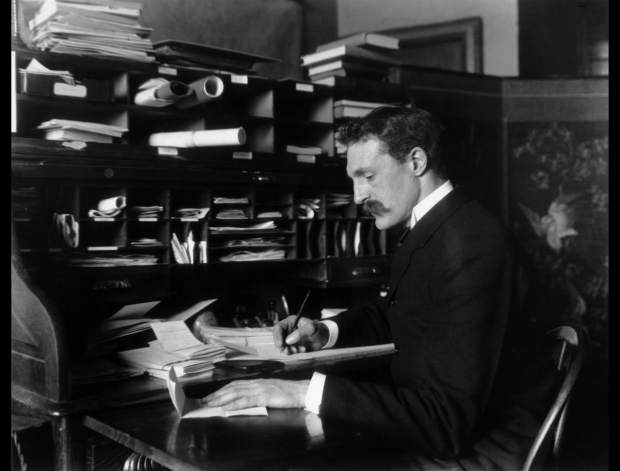
He often utilized his family’s estate, Grey Towers, to host a summer camp for the Yale Forestry School, which his family founded in 1900. Pinchot deepened his work in conservation when he founded the Society of American Foresters in 1901, which is now the largest professional organization for foresters in the U.S.
His independent thinking set the tone for what foresters should behave like in public office. In 1910 during a lecture he gave at Yale Forestry School, he outlined 11 maxims for forestry professionals to remember such as, “It’s more trouble to consult the public than to ignore them, but that is what you’re hired for,” and “Learn tact simply by being absolutely honest and sincere, and by learning to recognize the point of view of the other man and meet him with arguments he will understand.”
Pinchot’s environmental initiatives thrived under the presidency of Theodore Roosevelt, who became a personal friend as he was also focused on the natural world and its conservation. The dynamics shifted with the presidency of William Taft, who replaced Pinchot with Harry Graves after a disagreement about coal claims in Alaska. Pinchot continued to do the work of conservation in other ways before vying for public office and becoming involved in Pennsylvania politics as early as 1914, and then finally claiming office as Pennsylvania’s governor in 1922.
Pinchot’s personal life
The version of Pinchot that he presented to the world was accomplished and level-headed, with a heart for conservation of the natural world. The very heights of what he achieved stand in contrast to an unusual story about his romantic love for a young lady that lasted beyond the grave.
Gifford Pinchot and Laura Houghteling had several chance meetings while they were moving through the same social circles and crossed paths in New York City, Milford, Pennsylvania, and Chicago. Circumstances in 1892 moved them both to the Asheville, NC area – Pinchot for his work with George Vanderbilt’s estate, and Laura at her family’s summer home, Strawberry Hill, that stood facing the Biltmore Estate. Sadly, from the moment they met Laura was already afflicted with tuberculosis (TB), which slowly wasted her health away despite her great will to live. She convalesced at Strawberry Hill during their courtship at a time when there was no cure, but when the mountain air was believed to bring relief.
The rural nature of the community they lived in meant that the neighbors were allowed long visits away from prying eyes on the veranda of Strawberry Hill, and in a matter of months, their friendship transformed so that they were deeply in love and inseparable when together. One activity they both loved was reading philosophical works, and they would often read and discuss literature. He admired her straightforward nature and said they would often “discuss the state of the Universe from time to time and arrange its details and have a very jolly time together.”
A diary entry of Pinchot’s charmingly describes the joy he felt when they moved away from the formality of calling each other “Mr. Pinchot” and “Miss Houghteling” and he first called her by her first name “Laura.” He also fondly remembered a later special moment when they shared their first embrace and were interrupted by a chaperone.
The couple began to tell their friends about their romance in the spring of 1893. They planned to marry, and Pinchot seemed unwilling to admit that Laura’s illness was terminal. He was convinced that she would get well again, and that happiness was the cure. Friends commented that Pinchot was exuberantly happy with Laura, pulling him out of a melancholy and returning him to the “old cheery Gifford.”
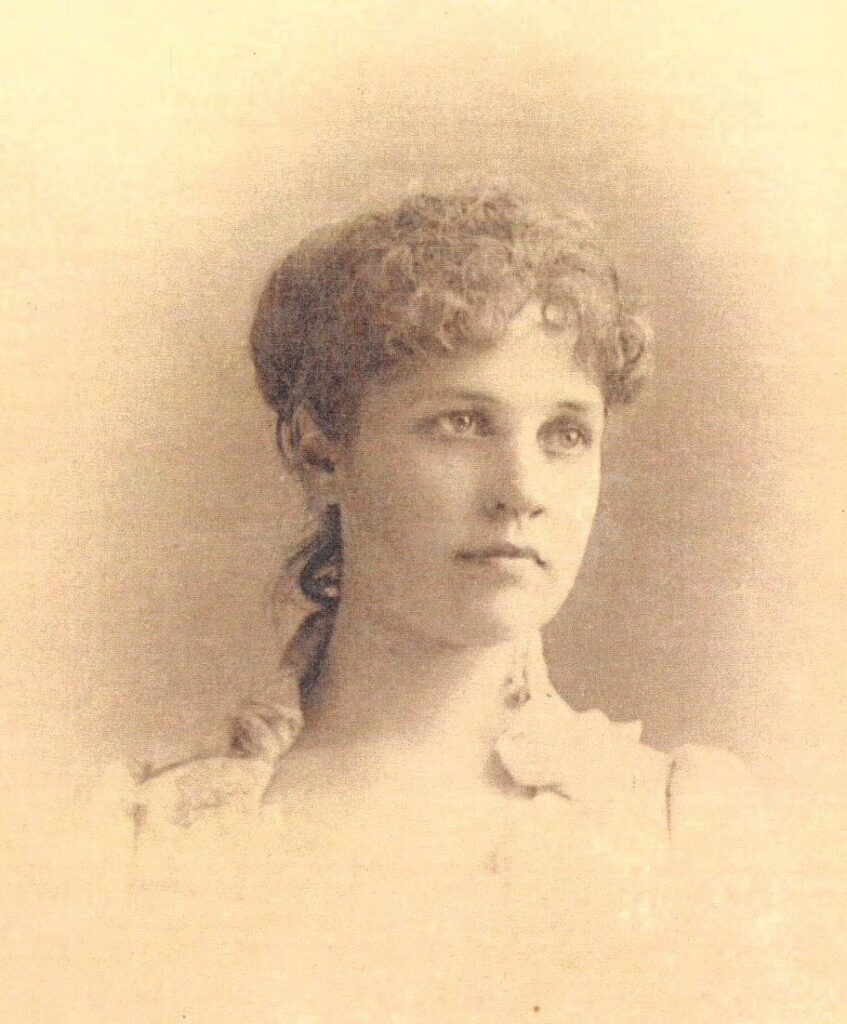
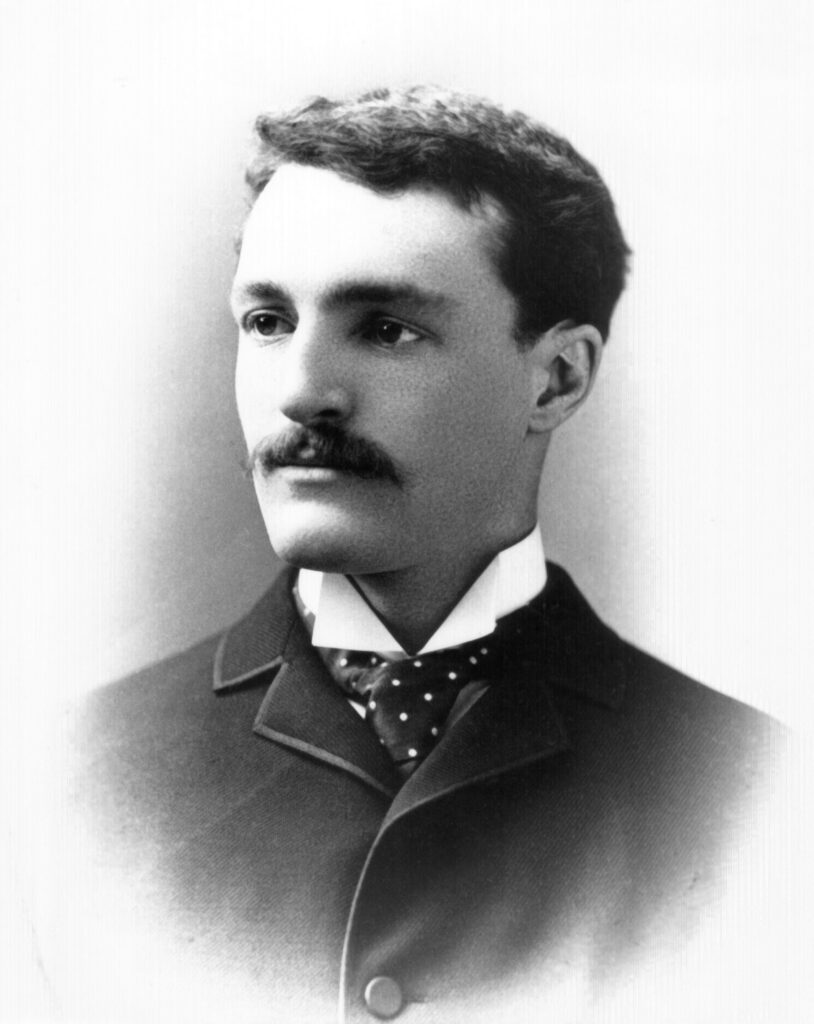
The couple seemed to bring out the best in each other. Friends commented on Laura’s beauty, loveliness, grace and charm, but it was also noted that she was warm, kind, unselfish, noble, and brilliant. She was known for her charity to the less fortunate, considerate nature, and concern with justice. Pinchot was described as a man with great integrity and moral fortitude, who campaigned for altruistic causes his whole life. He was athletic, slender, and tall at 6’1” and sported a full mustache. Especially in younger years, he was full of energy and would win foot races and feats of fortitude against friends, who said that his energy, maverick philosophy, and magnetic personality were part of his appeal.
Fashionably terminal
Our modern-day sensibilities may not understand that Laura’s long-term illness was actually believed to improve her attractiveness. The Victorian era saw a rise in an aesthetic that has now been coined “consumptive chic” for consumption, the common name for TB, so named for how it would slowly consume the sufferer. During this era, ideal feminine features included pale skin, rosy cheeks, shiny eyes, a slender frame, stooped posture, and narrow shoulders and waist. The wasting illness left the sufferer with these very features.
There were Victorian ideals around illness and death too that might seem strange to us today. The fact that TB seemed to more severely affect those with a delicate constitution perpetuated the idea that these sufferers were more fragile and delicate due to a more refined nature. Those with long-term, and especially terminal illness were characterized as “too good for this world” or more in touch with the spirit realm, due to their proximity to it. It was thought that the slow, decaying disease led the sufferer to a more contemplative life focused on the spiritual and intellectual. Beautiful souls cut down in the prime of life were often romanticized as forever young in a type of immortality.
There was a common understanding about what a “good death” should be – to pass away calmy, quietly, stoically, slowly, with time to say goodbye to loved ones, thinking of them and accepting your fate gracefully was seen as the peak way to exit the earthly realm. Succumbing with as little inconvenience to others as possible was key. TB and other wasting illness were seen to provide this type of good death, leaving the family with gentle grief and not overwrought displays of difficult emotions.
Beyond that, there was a rise in Spiritualism at this time when so many loved ones could be lost to death before their time. The Victorians often believed that the living could stay spiritually connected with the dead, and that those relationships would renew once the living passed away to the other side. The macabre, morbid fascination they had with death and a peaceful afterlife was evident in perspectives such as these.
The story of Gifford Pinchot’s love for Laura Houghteling continues in Part 2 at a later date.
Photographs and information for this column are provided by the Rowell Bosse North Carolina Room, Transylvania County Library. This article was written by Local History Librarian Laura Sperry. Sources available upon request.