English
 Arabic
 Chinese (Simplified)
 French
 German
 Spanish
 Vietnamese
Note: This is part of a series of articles about the history of the local community centers in Transylvania County.
The Dunn’s Rock community is located in south-central Transylvania. Dunn’s Rock extends roughly along Greenville Highway from Wilson Bridge to Connestee Falls, Island Ford Road to Island Ford Bridge, Connestee Road, Walnut Hollow Road to the top of the mountain, and Barclay Road to the French Broad River bridge.
It was one of the first areas to be settled while the county was still part of Henderson County. These Charlestonians including the Johnstones, Humes, and Hanckels, were wealthy plantation owners who bought mountain land as a retreat from summer heat and disease. These retreats also became sanctuary during the violence and uncertainty of the Civil War.
The first post office was established at Dunn’s Rock in 1855 with postmaster Ethan Davis. Service transferred to Transylvania County and Pinkney Johnstone took over the position.
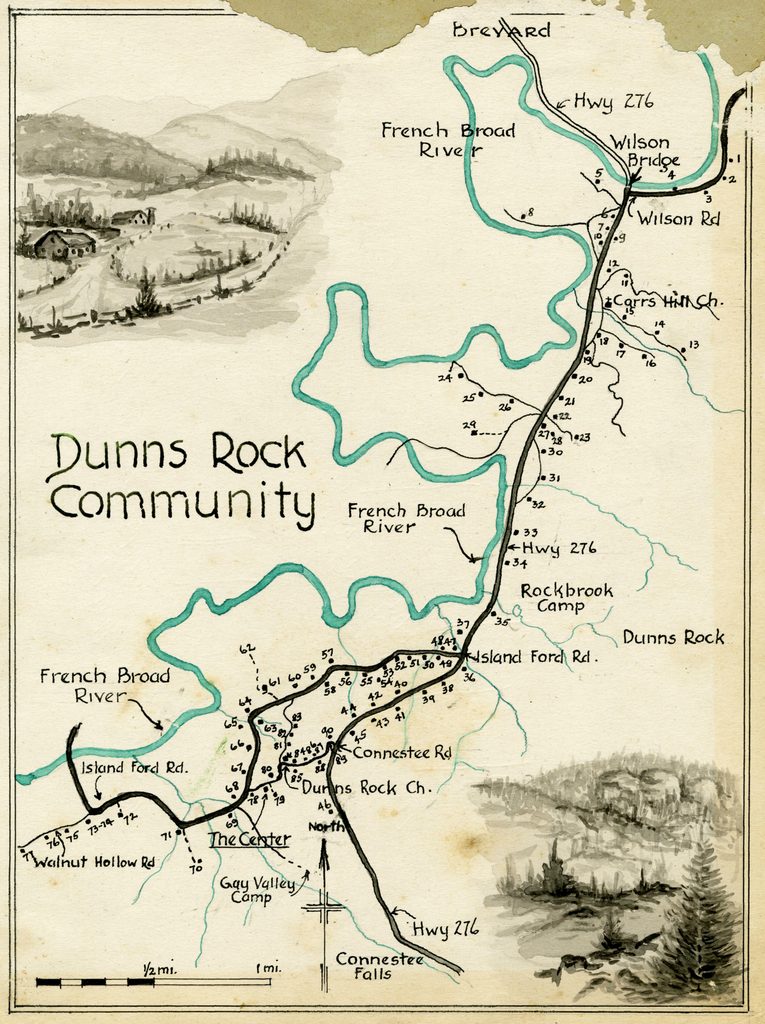
Dunn’s Rock is considered part of the much contested “Orphan Strip” of land that the Walton War was fought over. The land borders South Carolina, making the boundaries less certain in the early days of settlement.
Residents of this area found community in agriculture, if they weren’t associated with tourism. Several summer camps found the mountain woodlands ideal for their operations including Rockbrook Camp for Girls, Connestee Cove, Camp Perry-Ann, Camp Catachee, Deep Woods Camp, and Camp Gay Valley, which would become Camp Gwynn Valley.
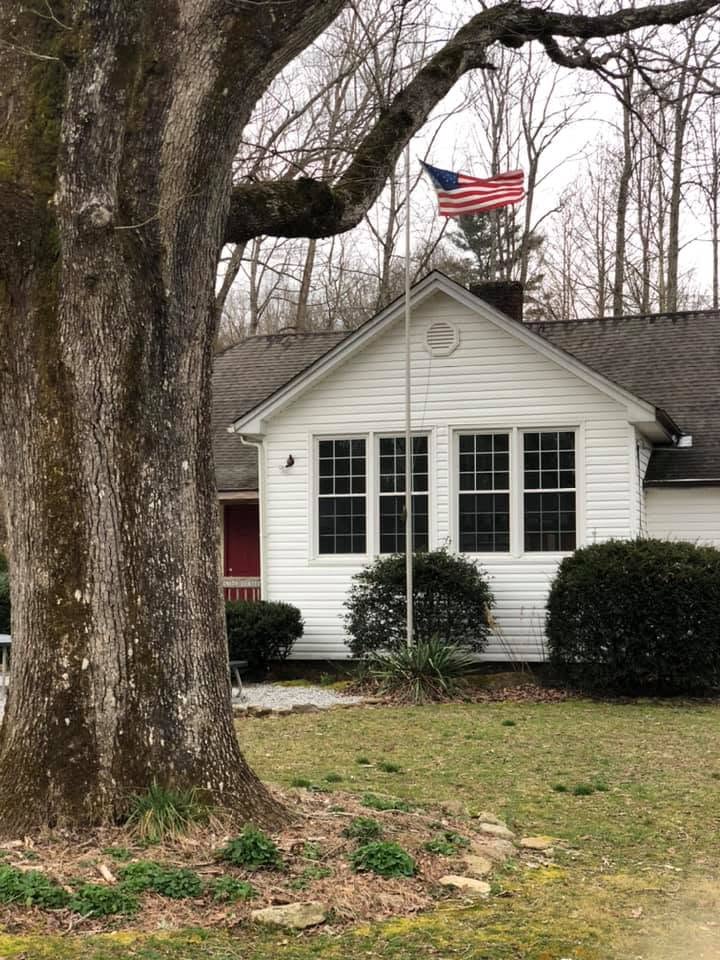
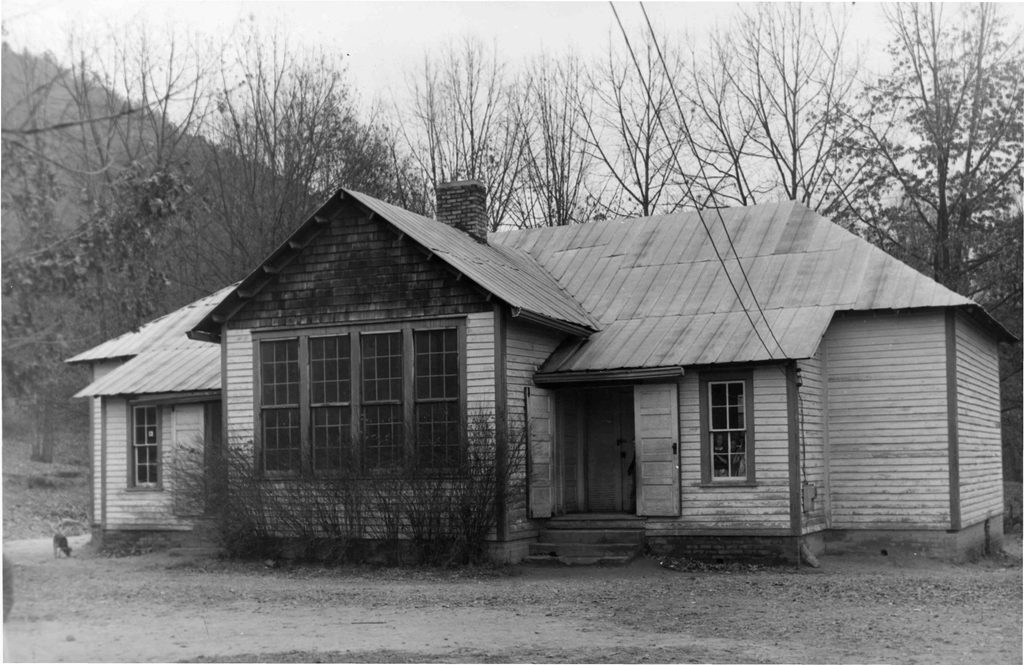
Island Ford School, located at the intersection of Walnut Hollow and Island Ford Road, seems to be the original community center for Dunn’s Rock. Records indicate the school operated from 1895-1920 before the land that would eventually become that of the community center was sold to the Transylvania County Board of Education (TCBOE) by Mr. Kimsey in 1920. At this time, a new building was constructed and the name changed to Connestee School. Newspapers of the era often mentioned Miss Hattie Aiken, the sole teacher there, and how successfully she ran the two-room schoolhouse.
Like many of the area schools, the school was discontinued and the building underutilized until the early 1950s when the Transylvania County Board of Education (TCBOE) sold the building and land to the “Community Center Club” in 1953 for both regular and occasional social events. According to the Transylvania Times, there was a bit of a bidding war when the school building sold, with the final winner being Richard H. Moore.
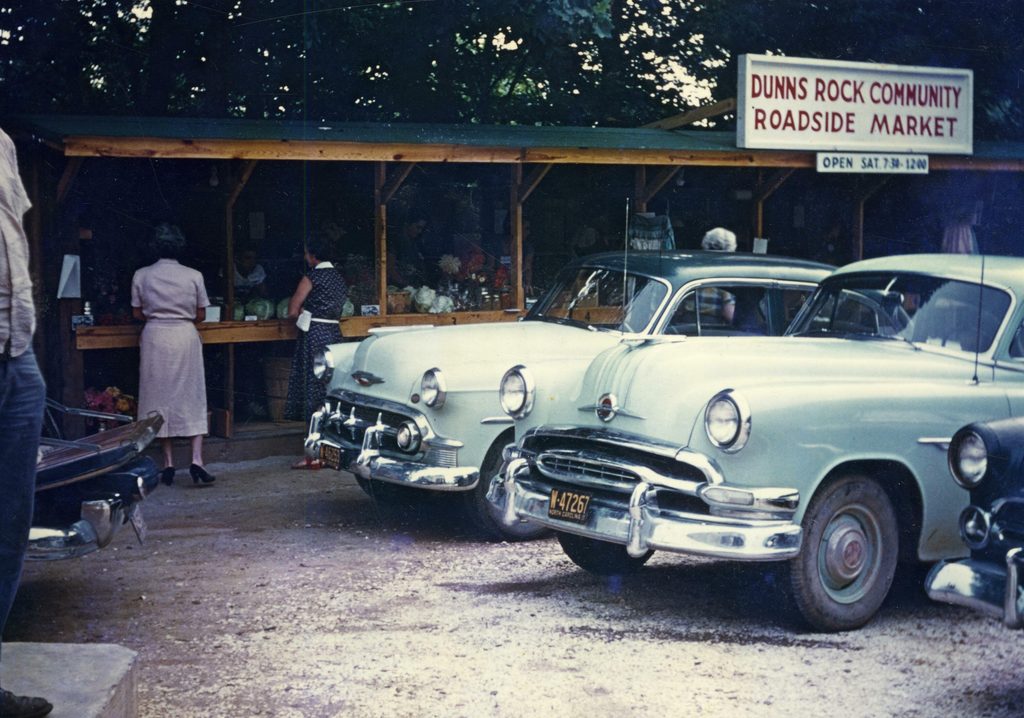
1955 was a big year for Dunn’s Rock Community Center (DRCC). They seem to be the first community center in Transylvania County to have the idea to construct a roadside market. The mostly wooden structure had a roof over nine stalls for the sale of produce, preserves, flowers, furniture, and other goods. It was near Mill Hill Grocery and operated during the summer – no doubt to catch the attention of motor tourists on Highway 276.
It was so successful that the DRCC won the Community Development Award that year and were honored during the annual downtown Christmas parade, theming their float after the successful market.
The DRCC continues to thrive and is utilized as a polling place, and is rentable for social gatherings, including barbecues, music shows, storytelling, dances, potlucks, exercise classes, speakers, and more. They hold quarterly gatherings called “Dinner and Program” events to maintain community.
Photos and information for this column are provided by the Rowell Bosse North Carolina Room, Transylvania County Library. This article was written by Laura Sperry, Local History Librarian. Special thanks to Carol Dodson and Keith Parker. Sources available upon request.