English
 Arabic
 Chinese (Simplified)
 French
 German
 Spanish
 Vietnamese
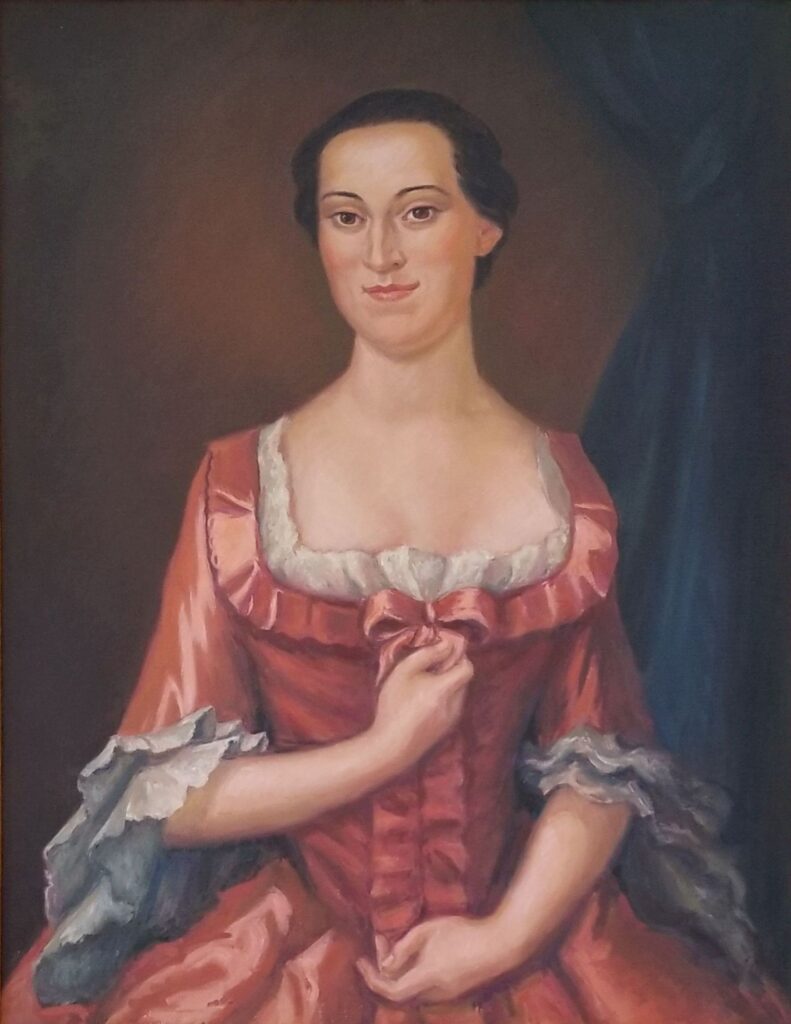
This year America celebrates 250 years since its founding, and communities across the nation are taking time to reflect on history from that era. Transylvania County is proud to highlight five North Carolina patriots for local celebration this year. This is part of a series of Patriot Profiles.
Penelope Padgett, Woman of Privilege
Penelope Padgett was born on June 17, 1728 in Port of Roanoke, NC, which is now known as Edenton, Chowan County, NC, to parents Dr. Samuel Padgett and Elizabeth Blount Padgett. Both sides of her family were some of the wealthiest and most influential planter class families in the North Carolina colonies during this time. Penelope was the middle sister of three daughters, and they had no other recorded siblings. The Padgett name is also often seen spelled “Pagett.”
Penelope grew up at her family’s home, Pagett Plantation, previously known as Blenheim Manor; it seems that later in life she inherited that property, which remained in her or her husband’s possession all her days.
Penelope experienced many tragedies in her life; however, those tragic losses of her family and loved ones impacted her wealth and social standing in overall favorable ways, despite how difficult it may have been personally.
Tragedy and Loss
Records for this era are patchy, often excluding anyone who wasn’t a landowner, so it is difficult to find direct evidence about Penelope’s female family members. It can be assumed that her mother and youngest sister Sarah passed away some time before her father Dr. Padgett, as they were not beneficiaries or mentioned in any way in Dr. Padgett’s final bequeathment.
Padgett was likely not expecting to come to an end so soon in his life, because he didn’t leave behind a will. In the absence of his will, it seems that Penelope became the sole beneficiary of his extensive estate when he died in 1745.
Earlier that same year Penelope’s married older sister, Elizabeth Padgett Hodgson, passed away leaving three children behind. At 17 years old Penelope took on the care of her niece and nephews, probably in part because the family had dwindled so quickly that there were no other living female relatives left.
With Penelope’s immediate family gone, her social position may have become more vulnerable – despite the fact that she was likely related by blood or marriage to many in the community. Perhaps this vulnerable social position is why she soon married her now-widowed brother-in-law John Hodgson (1715-1747) late in 1745.
John had fathered three children, John Jr., Isabel, and Robert, with his first wife Elizabeth. The stepsons were soon under Penelope’s care, and the girl, Isabel, is not mentioned in records. It’s possible she was of an age to be married, but there were many girls named Isabel in both lines of Penelope’s family, so it’s very difficult to tell what Isabel’s life became.
Together Penelope and John Hodgson had two children: Samuel and Thomas. The youngest child was very young indeed when John passed away in 1747 only two years into his marriage with Penelope. It’s possible that she may have been pregnant with Thomas when her child’s father died.
A Troublesome Inheritance
At the age of 21 Penelope was now the benefactor of her father’s estate and her brother-in-law turned husband’s estate. This double endowment set her up to be very wealthy indeed. The local courts took interest in her well-being, wanting to ensure that someone so young and female could be entrusted with such enormous wealth and the power that accompanies it.
Penelope secured the patronage of two of her maternal uncles: John and James Blount. With their backing, she sought to be awarded guardianship of her five children. Another maternal uncle, Charles Blount, placed himself in opposition to Penelope and petitioned to have her two Hodgson stepsons put under the guardianship of some of the prominent men in town instead. It should be noted that Charles was the youngest of Penelope’s uncles, only seven years her elder.
It seems that for a span of a few years, Charles Blount’s pressure succeeded, placing John Hodgson Jr. with Peter Payne and Robert Hodgson with Charles Blount himself. One can’t help but wonder if there were any additional income from the lucrative estate that accompanied these caretaking responsibilities.
A few years later in 1751 guardianship was returned to Penelope – but not until after she had remarried, perhaps putting the town elders’ fears to rest about this untethered young woman and her ability to rear her family and manage her inherited wealth.
More on Penelope’s second husband and political activities in the next article in the series. Photos and information for this column are provided by the Rowell Bosse North Carolina Room, Transylvania County Library. This article was written by Laura Sperry, Local History Librarian. Sources available upon request.